BSc, BOptom (UDW), MPH (Temple), OD (PCO), PhD (UNSW), FAAO, FBCO
Former student leader, political detainee, banned and house arrested during apartheid, Prof. Naidoo has continued his social consciousness through his academic career. He is a National Research Foundation B-rated researcher, educator and internationally celebrated public health leader and has been revolutionising access and delivery to eye care in Africa and for the disadvantaged throughout the world. A powerful public health advocate, he has devoted his working life to reducing avoidable blindness and vision impairment, with specific emphasis on refractive error.
“By investing in education and training in Latin America, we can create skills and implement optometry education on a local level.” – Kovin Naido
Professor Naidoo is Senior Vice President – 2.5 NVG, Inclusive Business, Philanthropy and Social Impact at Essilor, the former CEO of the Brien Holden Vision Institute and former Chairperson of the International Agency for the Prevention of Blindness (Africa), Associate Professor of Optometry at the University of KwaZulu Natal (UKZN), Adjunct Faculty at Salus University in Philadelphia and Senior Visiting Fellow at the University of New South Wales (Australia).
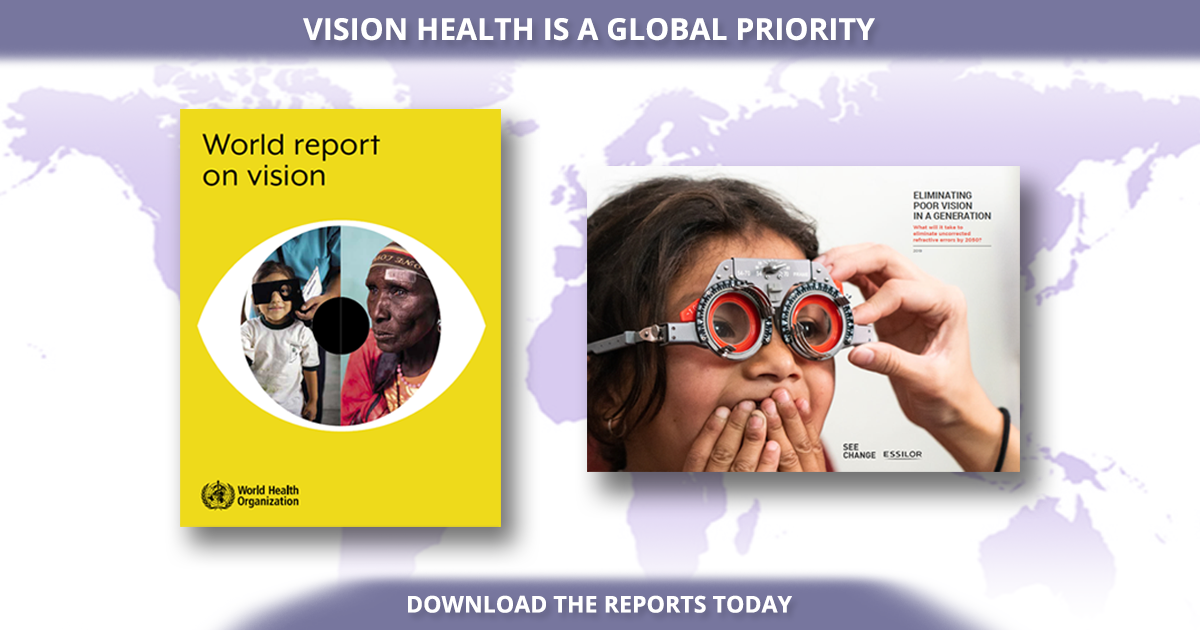
Kovin is a researcher who enjoys considerable international recognition by his peers for the high quality and impact of his recent research outputs and has been awarded a B-rating from the National Research Foundation. His research has spanned a plethora of focus areas, however, public health optometry remains at the core. Recognizing the need to develop research capacity in Africa, Prof Naidoo founded the African Vision Research Institute (AVRI). Among his notable contributions in research has been the Global Burden of Blindness articles which provide the most recent additions to the global burden of uncorrected refractive error.
His headship at the Brien Holden Vision Institute spearheaded several initiatives to support eye care, education and employment. Professor Naidoo founded the Global Resource Centre, an important innovation that works to overcome the significant barriers of cost and availability of spectacles and optical equipment, which limits the ability of eye care programmes across the globe from delivering appropriate vision correction. Under his leadership the Public Health Division expanded with programs in Africa, Latin America, India, China and the Western Pacific (53 countries). He initiated the Global Optometry Resource Platform which is developing and supporting schools in Malawi, Mozambique, Eritrea, Cameroon, Mali, Gambia and Guyana with new schools soon in Zimbabwe, Uganda and Haiti. This program is a sustainable solution to the human resources for eye health crises that the developing world faces.
Prof Naidoo is a Fulbright Scholar and was elected as an Ashoka Fellow and a Schwab Fellow and was a co-recipient of the African Social Entrepreneur of the year award in 2010 for his social entrepreneurial efforts in addressing the needs of those less privileged. The American Academy of Optometry awarded him the Essilor Award for outstanding contributions to Optometry in 2010, and the British College of Optometrists awarded him an honorary fellowship in 2009 for his contribution to the development of optometry in Africa and the developing world. He was awarded African Optometrist of the Year (2002), International Optometrist of the Year (2007) and University of KwaZulu Natal’s Convocation Award (2010).
Among Prof Naidoo’s many esteemed affiliations are; Member of the World Council of Optometry Governing Board; WHO Refractive Error Working Group; Founder and Chair of African Vision and Chair of the Red Cross Air Mercy Services board of Trustees.